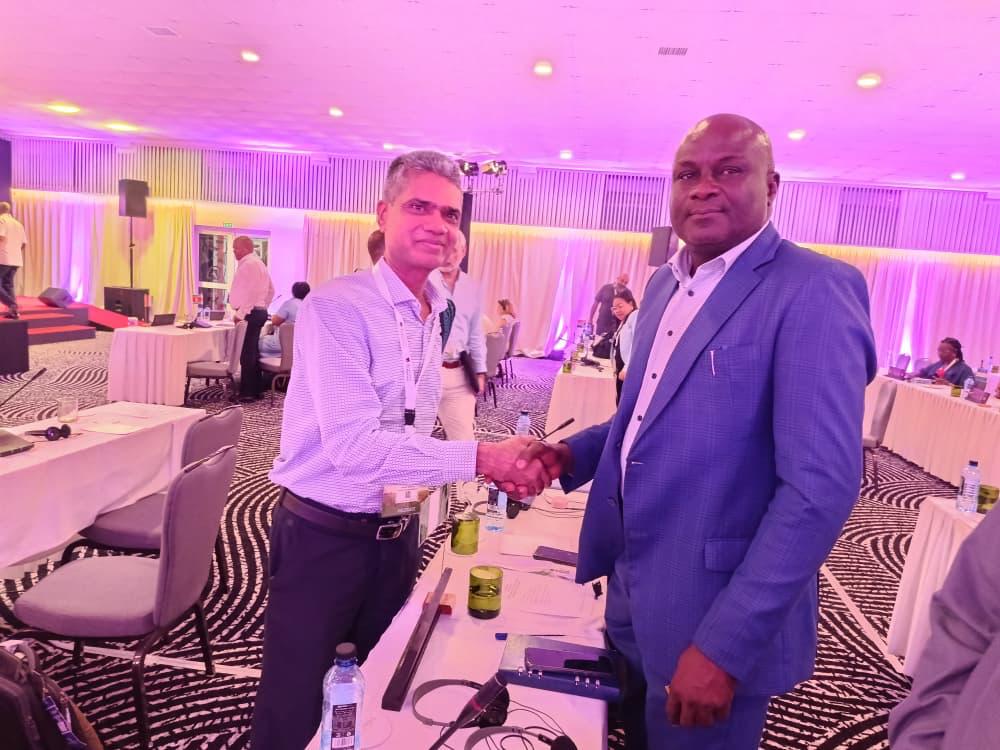
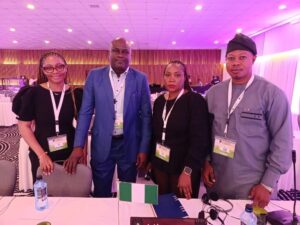
The Head of Monitoring and Performance Management, at the National Sugar Development Council (NSDC), Mr. Samuel Orhenna, led the Nigerian delegation to the 68th International Sugar Organisation (ISO) mid-year Council Meeting taking place in Diani, Kenya.
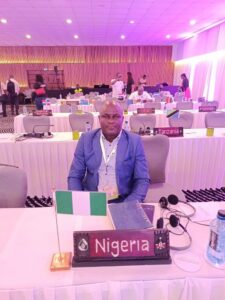
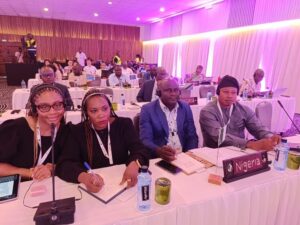
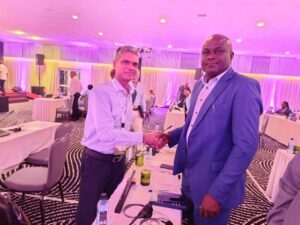
The Council Meeting commenced today with an opening ceremony chaired by the Deputy President of Kenya, Professor Kithure Kindiki.
The meeting has brought together official delegations of the ISO, invited observers, and stakeholders from about 85 countries who will participate in Council sessions, committee meetings and technical discussions.
Others are meetings of the Market Evaluation, Consumption and Statistics Committee (MECAS), the Administrative Committee, and the formal 68th Council Session.
This year’s mid-year ISO Council Meeting is themed “The Future of Sugar: Sustainability, Innovation and Market Integrity. Preliminary discussions, so far, have focused on ethanol and co-generation and the fact that in some member countries, sugar is the bye product.
The experience of countries like Kenya, Brazil, India, Uganda etc have also been on the table in terms of integrated models where nothing is a waste as well as focus on the alternative source of energy which sugar offers.
Speakers after speakers emphasise that focus should not start and end with the sweetness of the sugar…. There is a lot more….
Some of the speakers pointed at the Middle East crises and the recent standoff in the Strait of Hormuz which caused avoidable energy crises for the world, arguing that the global sugar industry has the potential to fill that gap.
Other issues that have so far come up for discussion are the plight of the farmer, that is, the profitability of growing sugarcane in Africa, the constant disagreement between farmers and milers, and institutional and legal bottlenecks affecting the growth of the industry.
Participants on the first day of the five-day meeting also explored the application of satellite imagery, geospatial intelligence, and artificial intelligence to improve productivity, planning and sustainability across the sugar value chain.
Also in the Nigerian delegation are the Technical Assistant to the ES, Miss Hanaan Durotoye, Mrs Ruth Ibrahim of Corporate Development and Mr. Samson Adedayo of Finance and Accounts.
The subsequent sessions of the just-concluded 68th Council Meeting of the International Sugar Organisation (ISO), focused on sustainable sugar sector development, ethanol and biofuels, trade and investment opportunities, technological innovation, and the evolving global sugar market.
Workshop – Ethanol is not the future, it is the present reality
Speaking on ethanol and biofuels as a strategic opportunity for Africa Dr. Plinio Mário Nastari of DATAGRO Group argued that ethanol offers a practical response to three major global challenges: energy security, food security, and climate change. Using Brazil’s experience as a case study, he explained how ethanol diversification significantly increased the value generated from sugarcane production and enabled Brazil to become a global leader in renewable energy. He stressed that Africa remains underrepresented in ethanol adoption despite possessing enormous potential. According to him, ethanol development could simultaneously boost rural incomes, improve trade balances, create jobs, and support low-carbon transportation systems.
The importance of strong regulatory frameworks in building sustainable sugar industries was also up for debate. Mr. Jude Chesire, Chairman of the ISO and CEO of the Kenya Sugar Board, outlined Kenya’s recent reforms under the Sugar Act 2024, which restored a dedicated sugar sector regulator after years of fragmented oversight. The reforms introduced digital farmer registration systems, improved traceability, strengthened farmer participation, and established clearer governance structures. Kenya also announced progress toward ethanol blending regulations and investments in refining and ethanol production plants. Mr. Chesire highlighted Africa’s annual sugar deficit of roughly 10 million tonnes, arguing that the African Continental Free Trade Area (AfCFTA) could stimulate the investments needed to bridge the gap.
Another major presentation explored Africa’s sugar investment frontier. Mr. Nick Kwolek of Kulea described Africa as the world’s most important future sugar market because of rapid population growth. East Africa, particularly Kenya, Uganda, and Tanzania, was identified as a highly attractive investment destination due to high domestic sugar prices, strong tariff protection, and growing demand. Uganda was described as the region’s only true surplus producer, while Tanzania was attracting major international investment because of its large land availability and strong agricultural conditions. West Africa, however, remains heavily dependent on imports, particularly from Brazil. Nigeria was highlighted as the continent’s single largest long-term sugar consumption opportunity because of its rapidly growing population and expanding refining capacity through companies such as Dangote Sugar Refinery, Flour Mills and BUA Foods.
Technology and innovation also featured prominently during the workshop. Mr. Gerald Yegon of Planet Labs explained how earth observation technologies and artificial intelligence are transforming the sugar value chain. Satellite imagery and AI can now monitor crop health, predict yields, support cane zoning, verify fertiliser subsidy use, improve crop insurance systems, and monitor harvesting compliance. Delegates agreed that these technologies could greatly improve planning, productivity, and climate resilience. The discussions encouraged Nigeria’s NSDC to consider integrating earth observation tools into its Sugar Industry Intelligence System for better monitoring and forecasting.
The role of science and partnerships in sustainable sugar development was also discussed extensively. Dr. Chrispine Omondi of Kenya’s Sugar Research and Training Institute (KESRETI) highlighted Kenya’s success in developing improved sugarcane varieties with shorter maturity periods, higher yields, and higher sucrose content. He explained how irrigated cane production in coastal regions had achieved remarkable productivity gains compared to traditional rain-fed systems. The presentation also stressed the importance of factory modernisation, ethanol production, automation, and quality-based payment systems. Dr. Omondi noted that stable funding and international research partnerships are critical for long-term innovation and sector competitiveness.
Council meeting/MECAS – What the figures say
The Council Meeting itself focused heavily on global sugar market developments through the Market Evaluation, Consumption and Statistics Committee (MECAS). ISO economists projected a global sugar surplus of 2.244 million tonnes for the 2025/26 season, marking the first surplus in six years. However, analysts warned that geopolitical tensions, especially the Persian Gulf conflict, were disrupting global refining capacity, increasing freight costs, and driving up oil and fertiliser prices. Despite these pressures, sugar prices remained weak, placing additional strain on producers.
Brazil continues to dominate global raw sugar trade with a 74 percent market share, while India’s growing ethanol programme has reduced its role as a major swing supplier in world sugar markets. Ethanol production globally is forecast to reach 129.4 billion litres in 2026, driven largely by Brazil, India, and the United States. Many countries, including Indonesia, Vietnam, Nepal, and the European Union, are moving toward stronger ethanol blending mandates, creating new opportunities for biofuel trade.
MECAS studies also examined the increasing importance of molasses as a strategic feedstock for biofuels, bioplastics, and green hydrogen rather than merely a byproduct of sugar production. Additional studies explored the evolving relationship between sugar and grains, especially through ethanol and carbon markets, as well as the growing impact of alternative sweeteners and health trends on global sugar demand. Experts noted that weight-loss drugs and health-conscious consumer behaviour could gradually reduce sugar consumption growth in developed countries, although Africa and parts of Asia remain strong growth markets.
Administrative committee – Nigeria shines brightest
The Administrative Committee addressed governance and membership matters within the ISO. With support from Nigeria, Mauritius’ Ms. Hanelina Nayamamy was unanimously elected Chairman of the Administrative Committee for 2026. The Committee also reviewed member voting rights and financial contributions. Several countries lost membership rights because of unpaid contributions, while Tunisia successfully restored its status after settling arrears. Nigeria received commendation during the Council for transmitting its ratification instrument of the International Sugar Agreement 1992 to the United Nations Treaty Division, an important diplomatic milestone achieved through collaboration between the NSDC and Nigeria’s Foreign Ministry.
ASDTF – If Nigeria provides leadership, Africa will move
The Africa Sugar Development Task Force (ASDTF) meeting further emphasised the importance of AfCFTA trade policies, rules of origin, and biofuel strategies for strengthening Africa’s sugar competitiveness. Nigeria was encouraged to remain actively engaged in shaping continental trade frameworks that affect its sugar industry.
Next steps
A Special Council Session scheduled for September 2026 in London to elect a new ISO Executive Director. Three candidates from Brazil, Eswatini, and Mauritius were shortlisted, and member countries, including Nigeria, were advised to consult internally and determine their voting positions ahead of the election.
Last line
The ISO is an intergovernmental body dedicated to enhancing conditions in the global sugar market by addressing challenges and fostering cooperation to maintain its stability and sustainability. Its member states collectively represent the vast majority of global sugar exports, production, and consumption.
ISO convenes its Council meetings twice a year — typically mid-year and in November. The mid-year meeting is hosted by the country chairing the ISO for that year, while the November meeting is held in London, United Kingdom. These gatherings provide a platform for policy discussions at a multilateral level, fostering collaboration within the global sugar sector.
The focus of the 68th Council Meeting spanned sustainable development of the sugar sector in Africa, with particular attention to the role of ethanol and biofuels, the application of technology and artificial intelligence across the sugar value chain, investment opportunities in East Africa, and the broader AfCFTA trade policy framework as it relates to sugar.
The Meeting underscored that the future of the sugar industry lies beyond traditional sugar production. Ethanol, renewable energy, biotechnology, artificial intelligence, climate resilience, and integrated bio-economies are increasingly shaping the sector globally.